4 stars
2014 | Comedy/Drama | Written and directed by Wes Anderson | Starring Ralph Fiennes, Tony Revolori, F. Murray Abraham, Adrien Brody, Jeff Goldblum, Willem Dafoe | Category IIB | 100 minutes
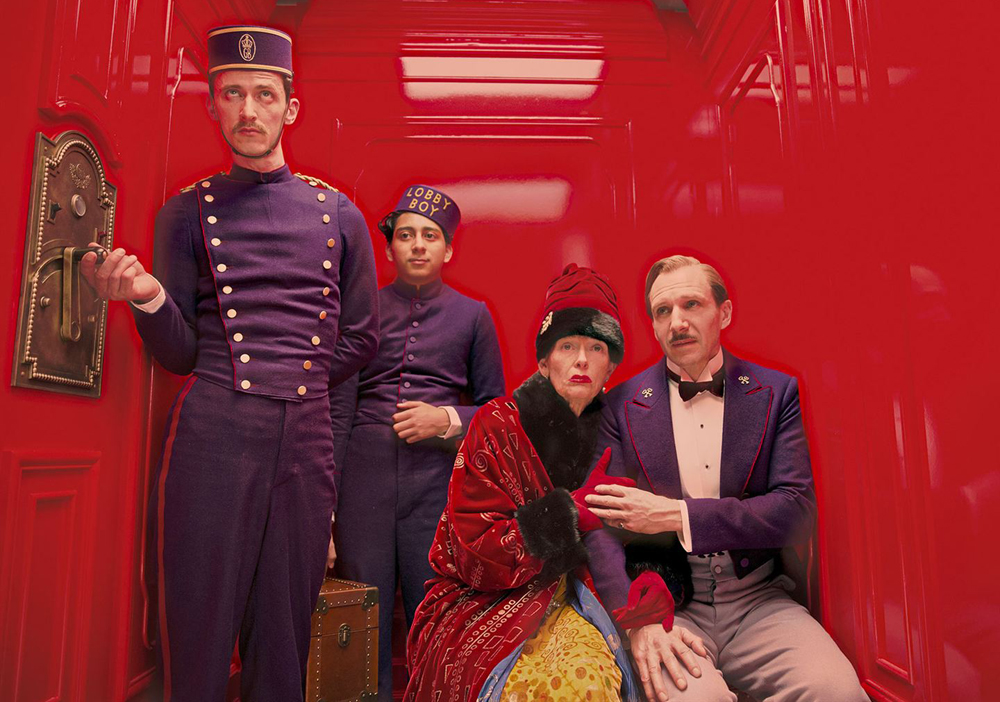
(USA/Germany) Wes Anderson’s latest film is a love letter to storytelling. The whimsical, nostalgic director has perfected his narrative style in “The Grand Budapest Hotel,” packing everything he can into this multilayered adventure: art theft, murder, imprisonment, secret societies, war, refugees, love, a snowmobile chase and Jeff Goldblum.
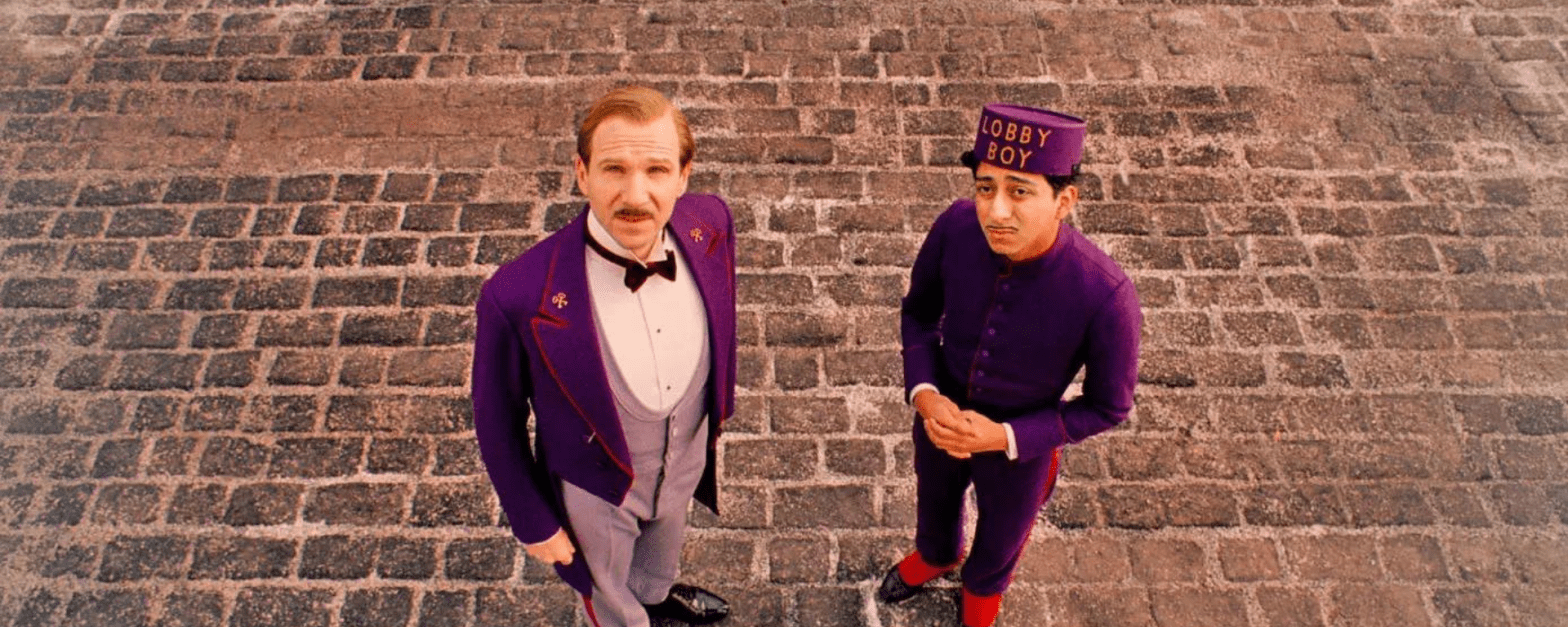
We begin in a graveyard with a girl visiting the final resting place of “The Author.” She opens one of his books and we are transported back in time to 1985, as The Author (Tom Wilkinson) begins his tale… we jump again to 1968, where we meet The Author’s younger self (Jude Law), staying at the lonely and sparse Grand Budapest Hotel. From here on the narrative is handed over to Mr. Moustafa (F. Murray Abraham) who tells The Author how he came to own the once-great hotel. And finally we are transported back to the hotel’s heyday in the 1930s with Mr. Moustafa’s younger self (Tony Revolori), beginning his first day as a lobby boy under the mentorship of the celebrated concierge, Monsieur Gustave H (Ralph Fiennes). The richest of the rich come to this secluded mountain retreat in search of its old-world elegance, but more importantly for its thoughtful concierge, who makes it a point of pride to bed his elderly female guests.
Yes, “The Grand Budapest” is a set of different sized boxes which all fit perfectly inside one another: open one beautiful pastel-colored box and an even better one awaits inside. But while the opening sequence of the story-within-a-story is an excellent treat in itself, Anderson’s real mastery lies in his two protagonists and his 15 supporting characters—some of whom only appear on camera for a minute, to showcase their pitch-perfect Wes Andersonian movement and delivery. He keeps all 17 puppets—what better word for the Anderson school of acting?—constantly dancing around the plot.
Many of the actors Wes Anderson collaborates with are no-brainers for his whimsical and deadpan style—Bill Murray, Owen Wilson and Jason Schwartzman to name a few—which is no doubt why they pop up in almost every one of the director’s projects. But it’s safe to assume that not many of us would have been able to predict Ralph Fiennes, the classically trained dramatic actor, joining the Anderson Mafia. Who knew that Fiennes was so funny? He turns up the charm as the foul-mouthed Gustave H., bringing some surprisingly hilarious and subtle physical humor to the role.
Wes Anderson has been perfecting his own unique, distinguishable universe for the past 20 years. Maybe it’s no surprise, then, that “The Grand Budapest Hotel” is his funniest film to date. With its stories-within-stories-within-stories all interwoven and garnished with a pastel bow, this feels like the film Anderson was born to make.
This review was originally written for HK Magazine.
 Katie Kenny